
Postcards from rural Scotland: being a doctor in some of the most remote and beautiful places of the UK
Author: MDDUS | Date: 20 October 2025
At a glance:
- Rediscover The Joy of General Practice is a scheme that have been recruiting doctors all over the UK for short placements in remote corners of Scotland since 2020. This should read: Rediscover the Joy of General Practice is a scheme that has been recruiting doctors from all over the UK for short placements different parts of Scotland since 2019.
- Dr Glennon retired as a partner from a practice in the Midlands, moving from a 40-year-long career that seems like a “blur”, to a four-year stint that “stands out”.
- Dr Owen has found that “people are kinder”, while he has the opportunity to spend more than the standard 10-minute appointment with patients.
- For Dr Wilson, the scheme has been “an eye opener”.
It was Sir William Osler, the “Father of Modern Medicine” who once said that “medicine is an art, not a trade; a calling, not a business”. But when you have run a practice for decades, it is easy to feel the colours on the canvas fade and the cold numbers take the place of that deep vocation that brought you to the profession in the first place.
In quieter corners of Scotland, where the pace slows and the landscape widens, doctors have been “Rediscovering the Joy of General Practice” via the eponymous scheme initiated in 2019 to address long-standing challenges in recruiting and retaining GPs in remote and rural areas of the country.
“The Joy”, how it is sometimes referred to for short, recruited GPs from all around the UK to work on two to four-week placements - effectively hit squads of GPs who could provide cover in practices with staffing issues.
The reviews from those who have swapped busy city practices for rural Scotland are raving: from being a “bit jaded” to becoming “extremely contented”, from “much involved in bureaucracy” to thinking “creatively”; from “an impossible burden of work” to feeling “revitalised”.
It is, perhaps, little wonder, considering what it offers and the profile of many who have been applying throughout the years: veteran doctors nearing the end of their careers, or even recently retired.
As for what is in store, consider an early ad: “Would you like to have the time to address your patients’ needs, providing holistic care within a team which knows their patients and community well?”, it read. “Are you interested in delivering modern, high-quality, evidence-based, realistic medicine in the context of traditional family general practice values?”. How many can resist?
These are some of the personal stories of doctors who have taken part – postcards of a life rediscovered, one placement at a time.
Postcard 1: Parachuted into the heart of the community
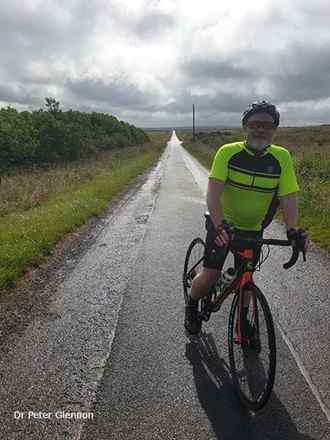
“I felt a huge sense of liberation being able to practice good old-fashioned medicine as it used to be in primary care, in the most beautiful environment,” says Dr Peter Glennon, who took part in the scheme between 2020 and 2024.
In 2019, after a 40-year-long career, Doctor Glennon was approaching retirement, as a partner at large practice in the Midlands, when he stumbled upon an advertisement in the British Medical Journal for The Joy.
Feeling he still had a lot to offer, he applied and ended up with a group of 25 colleagues, many of similar age, in a weekend of interviews at Inverness. They all got hired and started right before the COVID-19 pandemic hit.
“That first intake was a very tight bunch”, he recalls. “I think the strength of the joy in many ways was the remoteness of it. We had some excellent camaraderie, because being in such isolated communities, your colleague would be 3 hours away by car, but you felt that sense of closeness”.
All in all, his time at Rediscovery The Joy of Practice was something for the history books. “For me, looking back, I have had a very busy career. It is all condensed into a big blur, while these four years stand out”.
He ended up working in Shetland, the East Coast and the West Coast. Perks of the job included a short stay --which is less demanding from the point of view of friends and family--, a good salary and accommodation. But also, there was the place, the community, the landscape and the practice itself.
“In England, a lot of your role as a GP is collecting data from patients. When someone comes with a medical problem, you spend the first five minutes of an already short consultation asking about diabetes, etc.
“In Scotland, you could concentrate on what the matter was with the patient. And because of the distances, you often had to deal with very complex problems. The patients wanted you to sort it out; you had more time to spend with them. At the last place I worked, I was looking after 400 patients. In Stafford, it was 13,000.”
Did any specific story strike him particularly?
“I couldn’t single out a person. If I went to a practice I had never been to before, they made me feel welcome. In isolated communities, they are very happy to have a doctor there. You were almost parachuted into the heart of the community”, he says.
And yes, there was an extra perk in the beauty of Scotland itself. So much so that it gave Glennon the opportunity to go back to one of his former hobbies: birdwatching.
“It is a stunning landscape. The West Coast is the most stunning mountainous scene you’d see. But in the Shetland, you have the Simmer Dim in the summer (when the sun really doesn’t set), and you get the most beautiful sunsets”.
“I enjoyed all aspects of the challenge”.
Postcard 2: Kinder people, less resentment
Doctor Gerwyn Owen's story follows similar lines: a GP partner in a large practice for 32 years, in this case in Portishead, near Bristol; an early application, right before the pandemic, after hearing about the scheme at a conference. An acceptance. Several short stints, taking him from Shetland to Stornoway and Bridgend. And a feeling of joy that remains to this date.
“Basically, I got to my pension age and decided that I wanted to leave the practice and find something else to do. We had never been in this area and wanted to discover the Northern Isles,” he explains.
He now comes several times a year to different practices, totalling about three months. And like his colleague Dr Glennon, he feels the job to be more fulfilling.
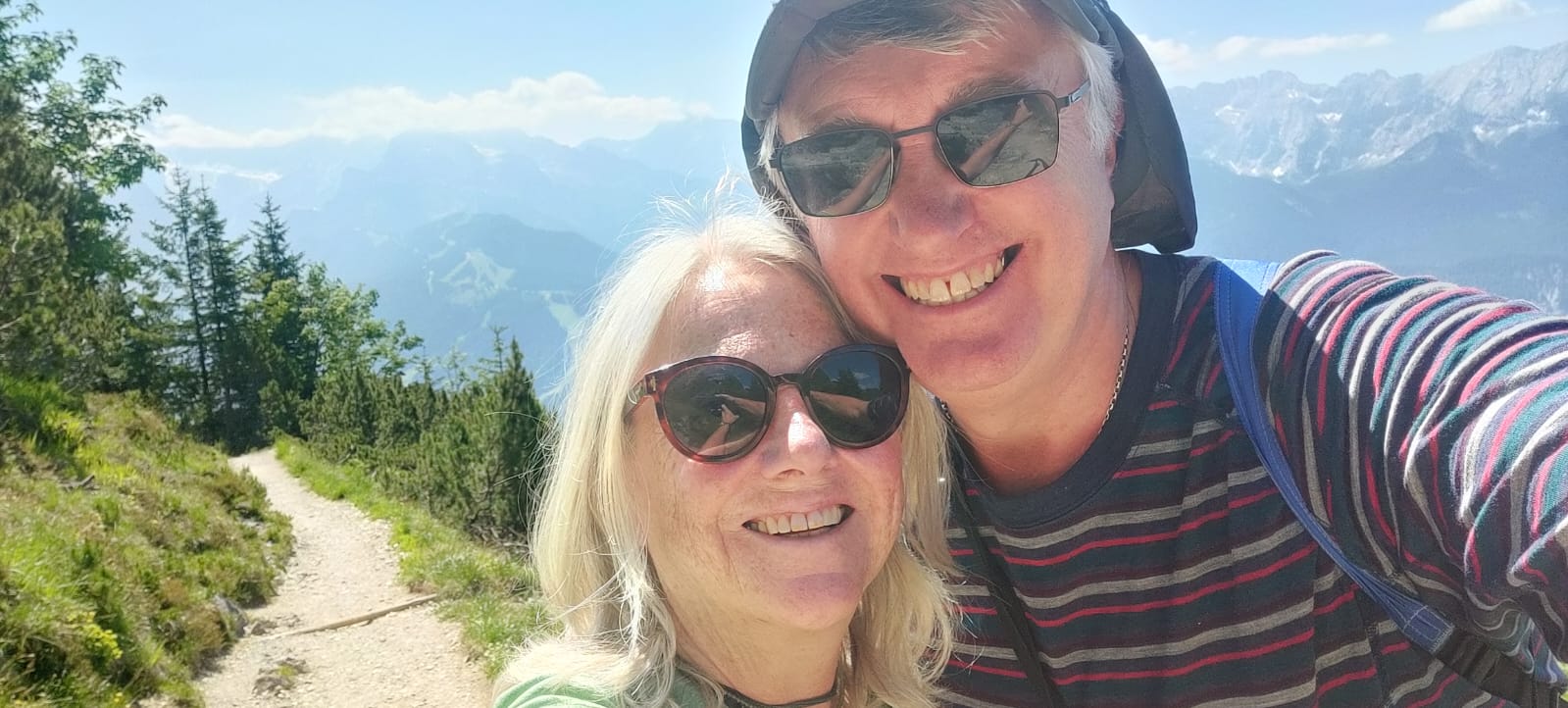
“My practice in Portishead was 8,500 patients. Here I have more time to spend with people. I feel much more contented, and it is a nice thing to be part of a small practice team. It makes you feel good and not resentful.
“I was telling my wife, people are a bit kinder. They are not feeling the need to quickly get out of my consultant room. Back at home, we ran an appointment system, where each patient was allocated 10 minutes. This is never enough time. We can be more thorough and caring.”
In the course of doing his job, Owen has met many interesting people, whose life experiences couldn’t be more different from those of a city GP.
“There are a lot of crofters. I remember during the height of the lockdown -COVID-19 hit the Northern Isles badly-, there was a man, very vulnerable, whom I told he needed to isolate and make sure he stayed away from other folk.
“I hear what you are saying -he said-, but my cow is going to have a calf in two or three weeks, and there is no way I am going to stay away here for a long time. Of course, there was no other human being for two or three kilometres around.”
He has discovered the delights of barbecued fish, Scotland style, and loves hiking with his wife, a retired linguist. He has even inspired his son and daughter-in-law to move to Shetland, becoming another incentive for him to come back.
As for idyllic places, his favourite is called Bigton, made famous because of the detective TV series, Shetland. “There is a sand bank with sea on both sides, which then leads you to an island. You cross the beach to the island. It is a magnificent place”, he says.
Postcard 3: Working in a fabulous part of the world
Another real-life example is Cameron Wilson, who had been in the same inner-city general practice for 33 years, much of the time as senior partner. At age 62, he didn't feel burnt out but “maybe just a bit jaded,” he said, when interviewed about his experience in 2023.
Towards the end of 2021, he saw an advert for vacancies under the ‘Rediscover the Joy of General Practice’ initiative.
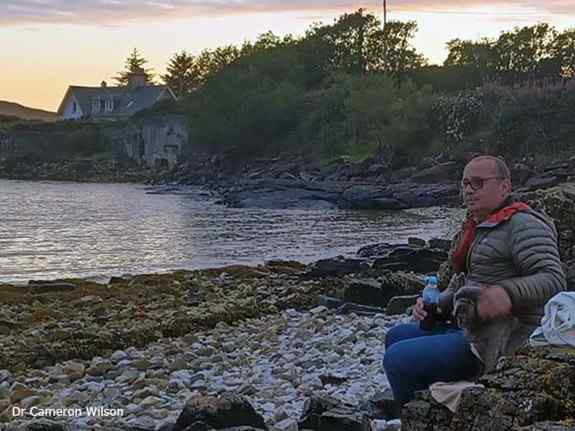
As a Scot living and working in England, the prospect of practising in a beautiful part of Scotland without the responsibilities associated with being a partner appealed to him greatly. And so he retired from his busy practice in Preston, Lancashire, and sought to rediscover some of the lost joy of general practice.
He has now left the scheme, after about three years and several placements, including small, relatively isolated communities in the rugged far north and west of Scotland.
“It’s been great for me,” he said in the 2023 interview. He appreciated the slower pace of the place, which he felt was good “from a medical point of view”, as he was able to “give much more time to patients” than he did before.
But not only that. Dr Wilson cherished “working in a fabulous part of the world” where he could feel “a part of the team in which everyone, the admin staff, other GPs and colleagues and the diverse and interesting bunch of other ‘Joy’ GPs” were pulling in the same direction.
For him, it had been “a real eye-opener”.
“To be honest, I didn’t know just how jaded I had become until I joined this scheme.”
This page was correct at the time of publication. Any guidance is intended as general guidance for members only. If you are a member and need specific advice relating to your own circumstances, please contact one of our advisers.

Elsewhere in MDDUS
FAQs
-
Who is MDDUS?
MDDUS is the Medical and Dental Defence Union of Scotland. It is a mutual organisation that supports doctors, dentists and healthcare professionals by providing professional indemnity, expert advice and representation, and by advocating on issues affecting medical and dental practice.
-
What is News.MDDUS.com for?
News.MDDUS.com provides news, insight and expert commentary on issues affecting doctors, dentists and healthcare professionals. It explains key topics such as wellbeing, regulation and workforce pressures, helping journalists, policymakers and stakeholders understand the challenges facing healthcare today.
-
Where can I find MDDUS membership information?
MDDUS membership information is available on the main MDDUS website. Visit www.mddus.com to find details about joining, member benefits, professional support services and official guidance for doctors, dentists and healthcare professionals.
-
How do I contact MDDUS with media enquiries?
Media enquiries should be directed to the MDDUS press team. Journalists can contact the MDDUS press team by telephone on 07976 886 552 or by email at press@mddus.com to request information, comment or expert insight.