
Persistent racist microaggressions undermine ethnically diverse NHS doctors
Author: MDDUS | Date: 23 October 2025
At a glance:
- Over 80% of minority ethnic doctors trained abroad report experiencing microaggressions, ranging from subtle comments to overt discrimination.
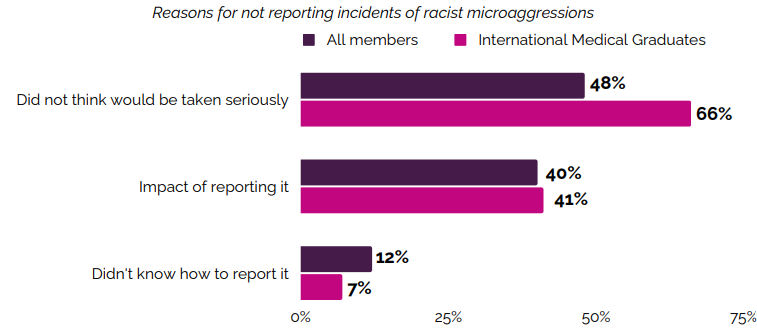
- Underreporting is common: an MDDUS survey found that 72% of International Medical Graduates did not report incidents, believing they would not be taken seriously.
- Consequences include mental health impacts, lower confidence, demotivation, and a risk of staff leaving, threatening NHS workforce sustainability.
If doctors are frequently subjected to all manner of verbal and physical abuse there is a demographic for whom there is an added layer: that of thinly veiled, everyday incidents of racism.
Report after report confirms what MDDUS found in a 2023 survey: the majority of overseas-educated doctors face persistent microaggressions at work in the NHS.
As is the case with incidents of violence and harassment, few come forward to report the situation.
Meanwhile, a separate survey for MDDUS found that just 9% of the public said they believed racist microaggressions were a frequent problem for the NHS. Almost 40% said they were slightly or not at all concerned about this being an issue.
Racist microaggressions are defined as patterned behaviours that (intentionally or unintentionally) undermine, belittle, stereotype or insult those in minority ethnic groups.
What effect do they have, and how is it being addressed?
Migration and doctors
With more than 1.5 million employees in England alone, the NHS is the single largest employer in the United Kingdom.
And its workforce is one of the most diverse.
In England, as of 2024, 28.6% of all staff came from an ethnic minority background, according to the NHS Workforce Race Equality Standards report The proportion is significantly higher amongst doctors.
Data from the General Medical Council showed that 45% of all doctors registered to work were International Medical Graduates (IMGs), a third of those mainly from Asia and Africa.
The national debate on migration extended to the National Health Service in July 2025, with the government committing to reduce the UK’s reliance on international recruitment of medical staff.
Health Secretary Wes Streeting said that “the NHS has been left in the immoral position of pinching doctors and nurses from countries which desperately need them” and that he was “determined” to bring down the proportion of IMGs to under 10% by 2025.
In January 2026, the Government introduced the Medical Training (Prioritisation) Bill. The bill aims to prioritise UK medical graduates for foundation training and give preference to UK graduates and doctors with significant NHS experience for specialty training.
Openly and subtle discrimination
Beyond the issue of migration, a 2021 report by the Institute for Fiscal Studies found that “among UK-trained doctors, 37% of junior doctors and 24% of consultants were non-White”.
But “even though the NHS 's doctor workforce is ethnically diverse, this does not mean the experience of staff is equal”, noted the IFS report.
Various studies have found racism to be a pervasive problem. In a 2022 British Medical Association survey, 76% of respondents said they experienced racism in the workplace on at least one occasion in the previous two years. The problem was more acute among minority doctors qualified overseas than those who trained in the UK – 84% versus 69%.
An international medical graduate told us how a consultant gynaecologist addressed her as “that little Indian girl” to a colleague. While another shared how someone made comments “about my surname [and] proceeded to make a clicking noise ridiculing surnames prevalent in southern African countries”.
Consequences
“Microaggressions are the most common form of covert, interpersonal racism and are often minimised as simple verbal mistakes or cultural missteps. Studies have shown that these 'subtle racist' interactions cause significant distress. The term 'micro' doesn't mean that the impact on the victim is small”, said Dr Naeem Nazem, head of medical at MDDUS.
The effects on confidence, mental and physical wellbeing were also highlighted in the BMA report. Depression and anxiety, increased stress levels, lowered confidence and self-esteem, sleep issues, worsened physical health, and feelings of demotivation, frustration and anger were all part of the picture.
The BMA also highlighted how discrimination manifested beyond comments. Doctors from minority backgrounds were given fewer opportunities and more scrutiny of their work. An earlier report by the King’s Fund highlighted a lack of ethnic minority representation at senior levels.
The stakes of ignoring these microaggressions are high. Almost one in four respondents said they considered the possibility of leaving their jobs because of racism. 9% had actually acted upon that thought and left.
Underreporting
The cycle of microaggression, deeply embedded in workplace culture, is a challenging one to break. 72% of respondents to our survey said they did not report incidents, as they did not believe they would be taken seriously.
Back in 2023, we called for the General Medical Council to work with the NHS to improve the reporting process in time for the new requirements on doctors to report abuse, discrimination and harassment, which came into force in January 2024 via the NHS Violence prevention and reduction standard.
“Having open, transparent and well understood reporting processes are an absolute requirement if Trusts are to achieve the ‘supportive culture and inclusive leadership’ the GMC says is needed so that every doctor, from every background, can thrive,” said Dr Nazeem.
“The NHS clearly needs to do a lot more to eradicate behaviours that so many international medical graduates find upsetting, belittling and insulting,” he added.
Given the existing evidence, progress remains limited. Without urgent and sustained action, the NHS risks undermining the very workforce it depends upon. Clearer accountability, stronger reporting systems and a demonstrably inclusive culture are essential to retaining doctors and safeguarding patient care.
This page was correct at the time of publication. Any guidance is intended as general guidance for members only. If you are a member and need specific advice relating to your own circumstances, please contact one of our advisers.

Elsewhere in MDDUS
FAQs
-
Who is MDDUS?
MDDUS is the Medical and Dental Defence Union of Scotland. It is a mutual organisation that supports doctors, dentists and healthcare professionals by providing professional indemnity, expert advice and representation, and by advocating on issues affecting medical and dental practice.
-
What is News.MDDUS.com for?
News.MDDUS.com provides news, insight and expert commentary on issues affecting doctors, dentists and healthcare professionals. It explains key topics such as wellbeing, regulation and workforce pressures, helping journalists, policymakers and stakeholders understand the challenges facing healthcare today.
-
Where can I find MDDUS membership information?
MDDUS membership information is available on the main MDDUS website. Visit www.mddus.com to find details about joining, member benefits, professional support services and official guidance for doctors, dentists and healthcare professionals.
-
How do I contact MDDUS with media enquiries?
Media enquiries should be directed to the MDDUS press team. Journalists can contact the MDDUS press team by telephone on 07976 886 552 or by email at press@mddus.com to request information, comment or expert insight.